Climate Control That Supports Business Operations
Commercial HVAC Services in West Valley City and surrounding areas for properties experiencing tenant complaints and equipment downtime
Offices, retail spaces, warehouses, and commercial properties require heating and cooling systems that maintain comfortable environments without disrupting daily operations. True HVAC addresses this through installation, repair, maintenance, and replacement services designed for business owners managing properties where temperature control directly affects employee productivity and customer experience. When commercial equipment fails during business hours, the costs extend beyond repair invoices to include lost revenue, compromised inventory, and dissatisfied occupants.
Commercial HVAC work involves equipment that operates longer hours under heavier loads than residential systems, requiring different maintenance intervals and more robust components. Proactive maintenance programs reduce unexpected failures by identifying worn parts, refrigerant leaks, and electrical issues before they cause system shutdowns, allowing you to schedule repairs during off-hours rather than responding to emergency breakdowns.
Request a commercial HVAC consultation to evaluate your current equipment's condition and maintenance needs in West Valley City, North Salt Lake, Kearns, and neighboring communities.
How Maintenance Programs Address Equipment Failures
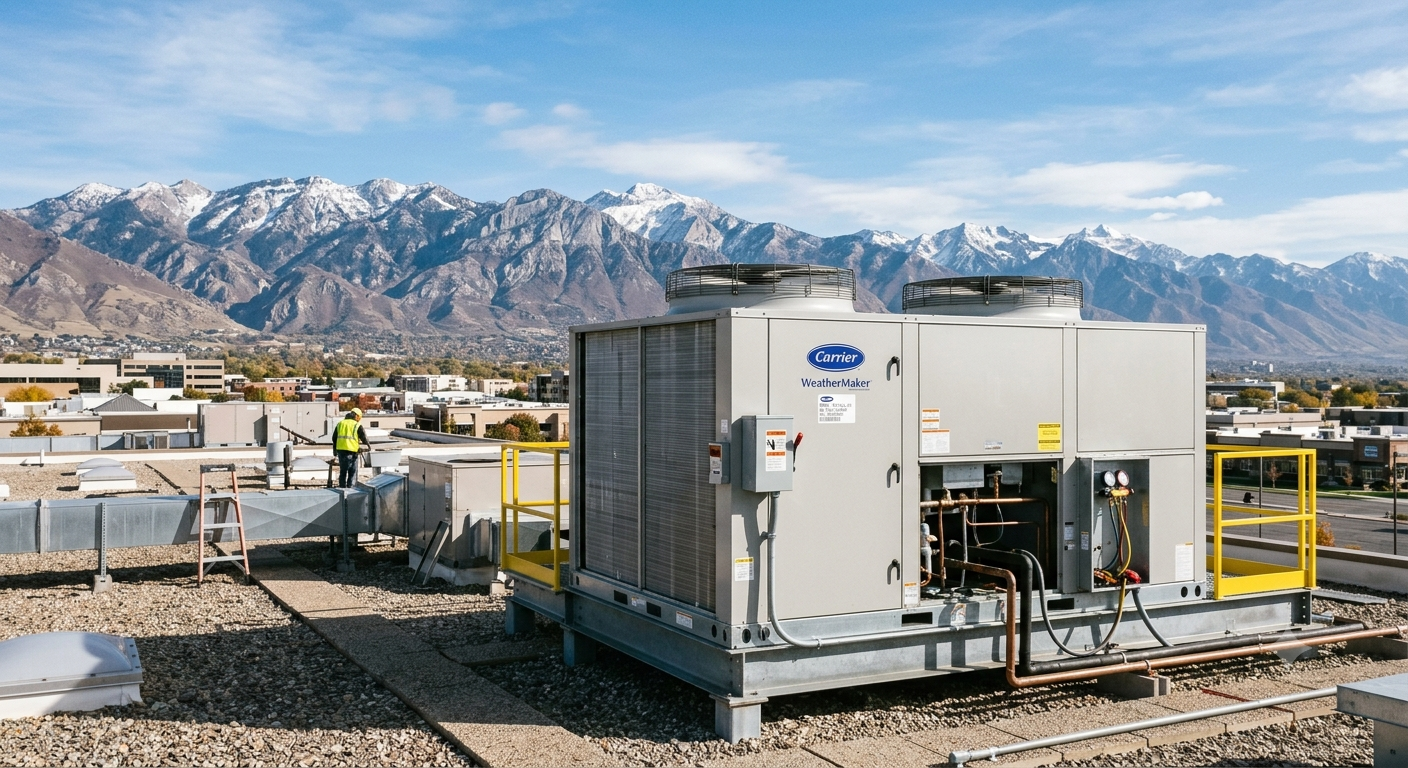
Scheduled commercial maintenance includes inspecting rooftop units, checking economizer operation, testing building automation controls, and verifying that all zones maintain target temperatures during occupied hours. These inspections catch problems such as failing compressors, dirty condenser coils, and malfunctioning dampers before they escalate into complete system failures that require emergency service calls.
After implementing a maintenance program, you notice fewer service interruptions, more predictable operating costs, and improved energy efficiency as equipment runs at design specifications rather than compensating for degraded performance. Tenants report consistent comfort levels, and utility bills reflect the operational improvements from systems that no longer work harder to achieve the same results.
Replacement projects for commercial properties involve coordinating installations to minimize business disruption, often scheduling work during evenings or weekends. The process includes evaluating whether existing ductwork and electrical infrastructure can support new equipment or requires upgrades to meet current building codes and manufacturer specifications.
Answers to Frequent Service Questions
Business owners typically ask about maintenance timing, response capabilities, and cost management strategies for commercial HVAC systems.
How often should commercial HVAC equipment receive maintenance?
Most commercial systems benefit from quarterly inspections rather than the annual service common in residential applications, particularly for equipment running extended hours or serving multiple zones with varying occupancy patterns.
What causes uneven temperatures across different areas of a commercial building?
Zoning imbalances, insufficient supply air to certain spaces, or improperly calibrated thermostats create hot and cold spots, often requiring airflow measurements and damper adjustments to redistribute conditioned air where it's actually needed.
Can older commercial equipment be repaired or does it require replacement?
Equipment older than twelve to fifteen years often lacks replacement parts availability and operates at significantly lower efficiency than current models, making replacement more cost-effective when factoring in energy savings and reduced repair frequency over a five-year period.
How quickly can emergency commercial HVAC repairs be completed in West Valley City?
Response time depends on the nature of the failure and parts availability, but most common issues such as compressor failures, refrigerant leaks, or control board problems can be diagnosed and repaired within the same business day to restore tenant comfort.
What's included in a commercial maintenance agreement?
Agreements typically cover scheduled inspections, filter changes, belt adjustments, refrigerant level checks, electrical connection testing, and priority scheduling for repairs, with specific services tailored to your equipment type and operating schedule.
True HVAC structures maintenance agreements around your operational requirements rather than generic service intervals, accounting for equipment age, usage patterns, and the consequences of downtime for your specific business. Arrange a property assessment to develop a maintenance plan that addresses your equipment's actual needs and your budget parameters.